

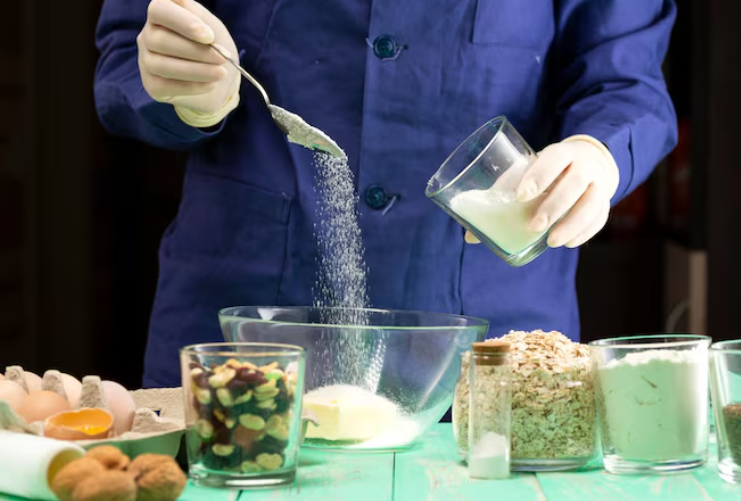

Don’t assume that cutting back the sugar in a recipe is as easy as cutting out the sweetness. Sugar also has an impact on bulk, browning, moisture retention, freezing characteristics, texture and flavor balance. When reduced, a product can be thinner, drier, harder, less sweet or less appealing even if another sweetener is added to return the sweetness. Allulose has been of interest due to its potential to offer some sugar-like properties with a lower energy content. However, its value is dependent on how it interacts with the other ingredients of the formula, rather than directly substituting them.
Understand the Sweetness Difference
Allulose is not as sweet as sucrose, so a gram of allulose will not provide the same sweetness as a gram of sucrose. It is commonly mixed with stevia, monk fruit sweetener or another sweetener to achieve the desired sweetness level without causing a harsh taste. An experienced Allulose Manufacturer can assist teams in weighing the pros and cons of powder form versus liquid form and implement a viable sweetener system.
The objective is to achieve a balance of sweetness, not the loudest. The perception can be influenced by acidity, serving temperature, flavor oils, fruit components and aftertaste. A cold drink can have a different flavor than the same drink as a room temperature drink, and a baked item can have a different flavor because of the fat and starch, which can release sweetness more slowly.
Consider Texture and Bulk
Sugar provides bulk, which means that high-intensity sweeteners cannot substitute for all the functions of sugar. Allulose can provide bulk; however, the actual texture will be influenced by water, proteins, fats, starches and processing conditions. Sugar is used in cakes and cookies both as a sweetener and to provide structure. Reducing sucrose can have an impact on spread, softness, crumb structure, and moisture retention. Product stabilizers and solids might need adjustments for dairy products, and beverages may be watery when the soluble-solids concentration is too low.
Careful testing of the frozen desserts is important due to the influence of sweeteners on freezing point. A good formula for fresh freeze can turn into ice, soft or challenging to scoop in storage. Don’t rely on one ingredient to fix all your problems; rather, evaluate the texture system as a whole.
Browse at Browning and Heat Response
Allulose can participate in the browning reaction and is likely to contribute to the appearance of pleasant color and roasted taste in baked goods. However, it will darken more quickly than normal under certain circumstances. The oven temperature, bake time, pH, protein content and moisture level should thus be inspected in trials.
Whether the product turns out right at the end of baking or changes as it cools or is stored will depend on the product. Modifications in the heating profile, reduction in the process time or combining allulose with other sweeteners may be necessary for developers. Changes should be assessed in the actual product, not based on a simplified product mix.
Test the whole production procedure
The sweetener system should be tested over the anticipated pH, temp and shelf life. Trials of beverages may require hot filling, pasteurization, carbonation or ambient storage. Dairy and frozen products must be monitored after temperature changes; powdered mixes should be monitored for flow, caking and moisture absorption.
Pilot batches should have the same proportions of ingredients and the same mixing sequence of ingredients as planned for production. Dosing, dissolving or handling issues may not be seen in small bench samples that are seen at scale. Recording the process details in the development phase helps to make scale-up more predictable.
Review Labeling and Market Requirements
Manufacturers should verify the label and regulatory treatment in all different markets before utilizing allulose. Supplier documents should include the source, format, specification, certificates, storage and traceability.
If reducing sugar also impacts color development, sweetener and color development can also be used together with Foodrgb, which may be beneficial. Comparing costs should not be limited to the cost of one sweetener, but should also include dosage, supporting ingredients, process changes, waste, yield and packaging.
Conclusion
Allulose has the potential to be used in reduced sugar formulation to provide sweetness, bulk, browning, moisture control and texture. It should not, however, be considered a blanket replacement for sucrose. The developers must evaluate the entire sweetener system, processing conditions, sensory profile, shelf life, labeling requirements and the total production cost. Bench testing should be followed by pilot testing before factory testing and then to launch. Foodrgb.com offers a forum for teams of food product developers to seek help with practical formulation in reduced-sugar beverages, bakery products, dairy foods and frozen desserts prior to commercial production or market distribution.